Respiratory Protection at Work: A Practical Guide to Respirator Selection, Fit Testing and Safe Use
By Pujan Thakkar
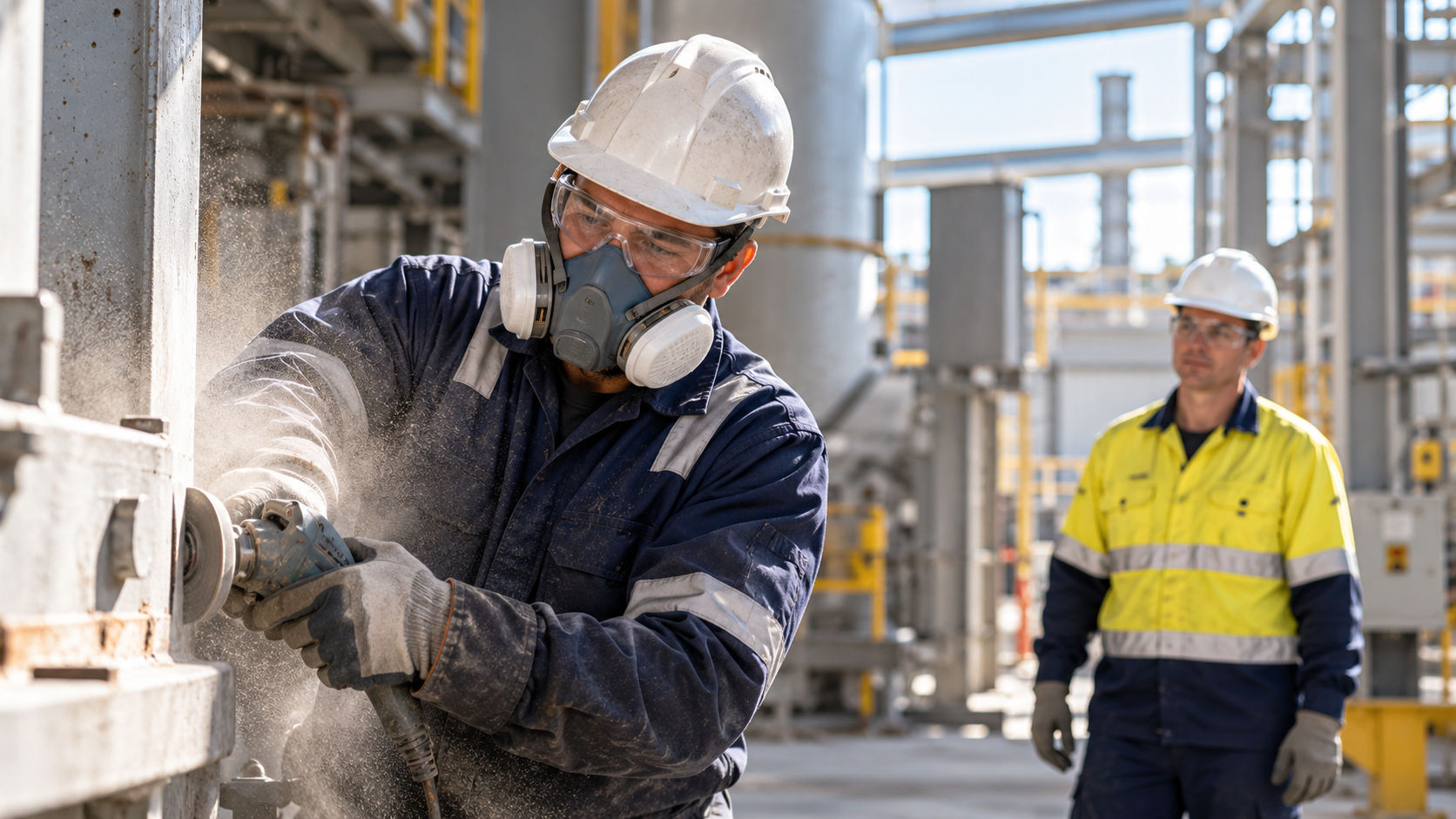
Respiratory protection is a critical part of workplace safety wherever workers may be exposed to airborne contaminants. Dust, fumes, mists, fibres, gases and vapours can create very different respiratory hazards, which means there is no single respirator mask that is suitable for every task. Effective respiratory protection starts with understanding the hazard, controlling exposure as far as reasonably practicable, selecting appropriate respiratory protective equipment, and making sure it fits and is used correctly.
For employers, safety managers and procurement teams, choosing a respirator should therefore be treated as part of a respiratory protection program rather than a simple purchasing decision. The filter or respirator classification matters, but so do face fit, compatibility with other PPE, maintenance, worker training, storage and replacement.
This guide explains the practical principles behind workplace respiratory protection, including disposable and reusable respirators, P2 respirators, P3 filters, respirator fit testing, facial seal considerations, filter selection and day-to-day care.
Why Respiratory Protection Requires a System
Respiratory protective equipment is generally used when airborne risks cannot be adequately eliminated or reduced through higher-level controls alone. Workplaces should first identify the contaminant and understand how exposure occurs. Depending on the task, controls may include substitution, isolation, enclosure, local exhaust ventilation, wet methods, extraction systems or changes to work processes.
Respirators then form an important personal protection layer for the remaining risk. This distinction matters because a respirator cannot compensate for an uncontrolled process simply by being issued to workers.
A strong respiratory protection program normally considers the hazard, exposure level, work duration, environmental conditions, respirator type, filter or cartridge, face fit, worker suitability, cleaning, storage and training. Each part affects the effectiveness of the overall system.
Start With the Airborne Hazard
Respirator selection should begin with the contaminant rather than the product. Airborne hazards can take several forms.
Dust and Particulates
Industrial dust may be generated during cutting, grinding, sanding, drilling, crushing, sweeping and material handling. Fine particles can remain suspended in the air and may be difficult to see. The appropriate controls depend on the material and exposure conditions.
Fumes
Fumes can be generated by high-temperature processes such as welding and some metalworking activities. The resulting airborne particles may require specific controls and respiratory protection.
Mists
Liquid droplets can become airborne during spraying, machining, cleaning and other processes. The chemical composition and concentration of the mist should be considered when selecting protection.
Gases and Vapours
Some chemicals produce gases or vapours that require appropriate cartridges or supplied-air systems rather than a simple particulate respirator. A particulate filter should never be assumed to provide protection against every chemical vapour.
What Is a P2 Respirator?
P2 respirator is a common search term in Australia because P2 particulate respirators are widely used for suitable particulate hazards. They are available in disposable filtering facepiece designs and in reusable respirator systems using compatible particulate filters.
However, the presence of a P2 marking does not automatically mean a respirator is appropriate for every dusty workplace. Selection must consider the actual contaminant, concentration, task, required protection level and applicable workplace requirements.
A respirator also needs to seal correctly to the wearer's face. Even an appropriate filter cannot perform as intended if contaminated air is leaking around the face seal.
P2 Mask vs N95: Why the Label Is Not the Whole Decision
People frequently search for P2 mask vs N95 because the terms appear on respirators sold in different markets. They originate from different standards and certification systems. It is not good practice to select workplace respiratory protection by assuming two labels are universally interchangeable.
Instead, buyers should verify the product certification relevant to their jurisdiction, the intended application, the manufacturer's instructions and the requirements of the workplace respiratory protection program.
For Australian workplaces, this is particularly important when products sourced internationally carry unfamiliar markings. Procurement teams should understand what standard a respirator has actually been tested to rather than relying on visual similarity between products.
Disposable vs Reusable Respirators
Both disposable and reusable respirators can have a place in industrial safety programs.
Disposable Respirators
Disposable filtering facepiece respirators can be practical for suitable particulate applications. They are lightweight, simple to issue and do not require reusable facepiece cleaning. However, they still need correct selection and fit, and they should be replaced when damaged, contaminated, difficult to breathe through or otherwise no longer suitable.
Reusable Half-Face Respirators
A reusable half-face respirator uses a durable facepiece with replaceable filters or cartridges. It can be useful where workers need respiratory protection regularly or where different compatible filters are required for different hazards.
Reusable systems introduce additional responsibilities. The facepiece must be inspected, cleaned and stored correctly. Valves, straps, seals and filter connections should remain serviceable.
Full-Face Respirators
A full-face respirator can provide respiratory protection while also covering the eyes and face. The required system depends on the hazard and task. Compatibility, fit, communication, visibility and other PPE requirements should all be considered.
Why Respirator Fit Testing Matters
Respirator fit testing is one of the most important parts of a tight-fitting respirator program. Search interest around respirator fit testing and mask fit testing reflects an important practical reality: workers have different face shapes and sizes, and one respirator model will not necessarily fit everyone.
A tight-fitting respirator relies on a seal between the facepiece and the wearer's face. If that seal is inadequate, contaminated air can bypass the filter.
Fit testing helps determine whether a particular make, model, style and size can achieve an appropriate fit for the individual wearer. It should not be confused with the user seal check performed each time a tight-fitting respirator is put on.
Fit Testing vs a User Seal Check
These two concepts are related but different.
Fit testing is a formal process used to assess whether a specific respirator fits an individual wearer appropriately.
A user seal check is performed by the wearer when putting on the respirator to help confirm that it has been seated correctly before entering the hazardous area.
A successful fit test does not eliminate the need for a seal check during everyday use. Workers should be trained to put the respirator on correctly and check the seal each time.
Facial Hair and the Respirator Seal
Anything that interferes with the sealing surface of a tight-fitting respirator can compromise the seal. Facial hair is a common example. Beards, stubble and other hair that crosses the sealing area can create leakage paths.
Workers who require tight-fitting respiratory protection should understand the facial seal requirements of the selected equipment and workplace program. Where a tight-fitting respirator cannot be used appropriately, the employer may need to assess alternative respiratory protection systems suitable for the hazard.
Choosing the Right Respirator Filter
Filter selection is not simply a matter of choosing the highest number or most expensive cartridge. The filter or cartridge must match the contaminant and respirator system.
Particulate filters are intended for suitable airborne particles. Gas and vapour cartridges are designed for particular contaminant classes. Combination systems may be available for environments containing more than one type of hazard.
Before selecting filters, determine:
- what contaminant is present;
- whether it is particulate, gas, vapour or a combination;
- the expected exposure conditions;
- the respirator manufacturer's compatible filter options;
- the required protection level;
- the applicable replacement or change schedule.
Do not improvise by mixing filters, cartridges and facepieces from incompatible systems.
P2 and P3 Respiratory Protection
Searches for P2 respirator and P3 respirator often come from workers trying to understand particulate protection levels. The correct choice depends on the hazard assessment and applicable respiratory protection requirements.
Higher classification should not be treated as a substitute for proper selection. A respirator still needs to be appropriate for the contaminant, compatible with the task and correctly fitted.
Procurement teams should avoid buying respiratory PPE purely on a broad statement such as 'for dust'. Different dusts and processes can involve very different risks.
Respirator Selection for Common Industrial Tasks
Grinding and Cutting
Grinding, cutting and abrasive work can generate significant airborne particulate matter. Engineering controls such as extraction and dust suppression should be considered first. Where respiratory protection is required, the respirator should be selected for the specific material and exposure.
Construction Dust
Construction activities can generate dust during drilling, demolition, cutting and cleanup. Respirator selection should be part of the broader dust-control plan rather than the only control measure.
Welding and Fabrication
Welding can generate fumes and other contaminants depending on the process, material and coatings involved. Respiratory protection should be selected following a suitable risk assessment and should work correctly with welding helmets and other PPE.
Painting and Chemical Work
Spray painting and chemical handling may involve vapours, mists and particulates. A particulate-only respirator may not address all hazards. Cartridge selection and ventilation requirements should be based on the substances being used.
Manufacturing and Maintenance
Maintenance teams often perform varied tasks, which makes generic respirator selection risky. Grinding one day and solvent cleaning the next may require completely different respiratory controls.
Compatibility With Other PPE
Respiratory protection rarely operates in isolation. Workers may also need safety glasses, goggles, face shields, helmets, hearing protection and protective clothing.
These products must work together. Safety glasses should not interfere with the respirator seal. Helmet straps should not disturb the facepiece. Goggles should sit correctly without forcing the respirator out of position.
This is one reason PPE should be assessed as a complete system rather than as separate catalogue items.
Comfort Matters More Than Many Buyers Expect
A technically appropriate respirator still needs to be wearable for the required task. Excessive pressure, heat, communication difficulty or poor compatibility can encourage workers to adjust or remove PPE.
When evaluating respirators, consider:
- facepiece size options;
- strap adjustment;
- breathing resistance;
- weight;
- heat and humidity;
- compatibility with eyewear;
- communication requirements;
- duration of wear.
Worker trials can be valuable when selecting equipment for large teams, provided all required technical criteria have already been met.
How to Inspect a Reusable Respirator
Reusable respirators should be inspected before use. A simple check can include:
- facepiece condition;
- cracks, distortion or stiffness;
- strap condition;
- buckles and adjustment points;
- inhalation and exhalation valves;
- sealing surfaces;
- filter or cartridge connections;
- filter condition;
- cleanliness;
- signs of chemical or physical damage.
If a component is damaged, the respirator should be removed from service until it can be appropriately repaired or replaced.
Cleaning Reusable Respirators
Reusable respiratory protective equipment requires regular cleaning. Cleaning methods should follow the manufacturer's instructions because harsh chemicals or unsuitable processes can damage facepiece materials, valves and seals.
Workers should not share reusable facepieces without appropriate hygiene controls. Where equipment is shared, cleaning and disinfection procedures become particularly important.
After cleaning, the respirator should be inspected and allowed to dry appropriately before storage.
Correct Respirator Storage
Storage is often overlooked. Leaving a respirator exposed on a workbench, inside a dusty toolbox or loose in a vehicle can contaminate or deform it.
Reusable respirators should generally be stored in a clean, dry location protected from contamination, excessive heat, sunlight and physical damage. The facepiece should not be compressed in a way that permanently alters its shape.
Filters and cartridges should also be managed according to the manufacturer's instructions and workplace program.
When Should Respirator Filters Be Replaced?
There is no universal replacement rule that applies to every filter and cartridge. Replacement depends on the type of filter, contaminant, exposure, environmental conditions, manufacturer's instructions and workplace change schedule.
Particulate filters may require replacement when damaged, contaminated or when breathing resistance becomes excessive. Gas and vapour cartridges require an appropriate change schedule rather than waiting for a worker to detect a contaminant by smell.
Procurement teams should therefore consider ongoing filter availability when choosing a reusable respirator platform.
Common Respiratory Protection Mistakes
Choosing a Respirator Based Only on Price
Respiratory PPE is a safety control. Selection should be based on suitability, certification, fit, compatibility and total program requirements before price is considered.
Using a Dust Mask for Every Airborne Hazard
Not every airborne contaminant is a particulate. A particulate respirator should not be assumed to protect against gases or vapours.
Skipping Fit Testing
A tight-fitting respirator that does not fit the wearer properly can allow leakage around the seal.
Ignoring Facial Hair
Facial hair crossing the sealing surface can interfere with a tight-fitting respirator.
Using Dirty or Damaged Equipment
Reusable respirators need inspection, cleaning and correct storage just like other safety equipment.
Mixing Incompatible Components
Filters and cartridges should only be used with compatible respirator systems according to manufacturer requirements.
Building a Workplace Respiratory Protection Program
A practical program can be built around several core steps:
- Identify airborne hazards and work activities.
- Assess exposure and existing controls.
- Apply higher-level controls wherever practicable.
- Select suitable respiratory protective equipment for the remaining risk.
- Confirm the respirator is compatible with other required PPE.
- Conduct appropriate fit testing for tight-fitting respirators.
- Train workers in correct fitting and user seal checks.
- Establish cleaning, inspection and storage procedures.
- Set filter and cartridge replacement requirements.
- Review the program when tasks, hazards or equipment change.
Respirator Procurement Checklist
Before placing a workplace order, buyers should confirm:
- the hazard and intended application;
- required certification and classification;
- available facepiece sizes;
- fit testing requirements;
- filter and cartridge compatibility;
- availability of replacement filters;
- cleaning and maintenance requirements;
- compatibility with helmets, eyewear and hearing protection;
- worker comfort for the expected wear period;
- supplier support and continuity of supply.
This approach is particularly important for larger industrial programs because changing respirator systems later can require new fit testing, training, stock and replacement components.
Respiratory Protection in Australian Workplaces
Australian businesses should ensure their respiratory protection arrangements align with applicable work health and safety requirements, relevant standards, manufacturer instructions and the specific hazards present at the workplace.
Searches for AS/NZS 1716 respiratory protection, P2 respirator and respirator fit testing show that buyers are often trying to connect product selection with Australian requirements. Standards should be used in their proper context rather than as a marketing label. Employers should confirm what requirements apply to their workplace and seek competent advice where necessary.
How Triotex and PPE CART Support Industrial PPE Programs
Triotex works with industrial businesses that need protective workwear and garment programs for demanding environments, while PPE CART supports access to workplace PPE and industrial safety products across a wider range of protection categories.
About the author
Pujan Thakkar is building Triotex and PPE CART with a focus on industrial workwear, PPE, product strategy, manufacturing, growth, and partnerships. He writes about FR workwear, hi-vis standards, white label manufacturing, and practical supply programs for industrial buyers.