Chemical Splash PPE: How to Choose Protective Clothing, Gloves and Eye Protection
By Pujan Thakkar
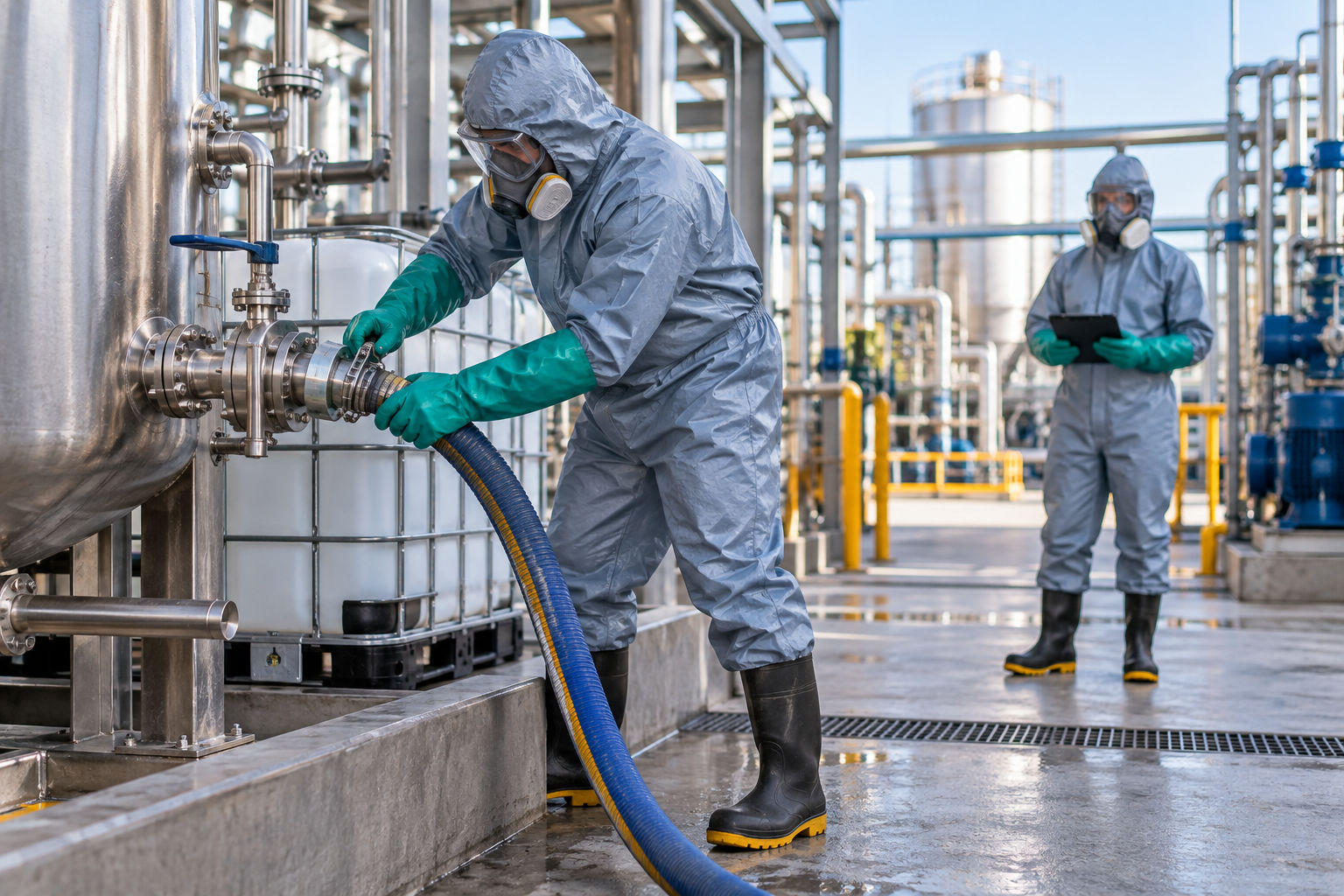
Chemical handling is part of everyday work across manufacturing, laboratories, water treatment, maintenance, mining, oil and gas, cleaning, warehousing, agriculture, engineering and many other industries. The substances involved may vary from mild cleaning chemicals to corrosive liquids, solvents, process chemicals and hazardous mixtures, but one principle remains the same: chemical splash PPE should be selected for the actual hazard, not simply because a garment, glove or face shield looks protective.
Choosing chemical protective clothing can be more complicated than buying general industrial workwear. Different chemicals behave differently against different materials. A glove that performs well against one substance may offer poor resistance to another. A lightweight disposable coverall may be suitable for nuisance contamination or limited splash exposure but inappropriate for a task involving sustained liquid contact. Goggles may be required where safety glasses leave the eyes exposed, while some tasks may require both goggles and a chemical face shield.
This guide explains how safety managers, procurement teams and industrial buyers can approach chemical splash PPE selection more systematically. It covers chemical resistant coveralls, protective suits, gloves, eye and face protection, respiratory protection, footwear, compatibility, inspection and common purchasing mistakes.
Start With the Chemical Hazard, Not the PPE Catalogue
The first step in chemical PPE selection is identifying what workers may actually be exposed to.
Before choosing protective clothing, establish:
- the chemical or mixture being handled;
- its concentration;
- whether exposure may involve splash, spray, mist, vapour or immersion;
- how much liquid may be released;
- how long contact could last;
- which parts of the body may be exposed;
- whether respiratory exposure is also possible;
- whether the task involves heat, flame or another simultaneous hazard.
This matters because chemical protection is not universal. The phrase chemical resistant clothing can describe many different products, from aprons and sleeves to disposable protective coveralls and fully encapsulating suits.
The correct product should be selected based on the risk assessment, safety data for the substance, manufacturer chemical-resistance information and applicable workplace requirements.
Control the Chemical Before Relying on PPE
PPE should not be the only control used for chemical hazards. Workplaces should first consider whether exposure can be eliminated or reduced through higher-level measures.
Examples include:
- substituting a less hazardous chemical;
- using closed transfer systems;
- installing pumps instead of manual pouring;
- using local exhaust ventilation;
- isolating chemical processes;
- installing splash guards;
- using automatic dosing systems;
- improving container handling procedures;
- providing suitable spill containment.
Chemical splash PPE then protects the worker against the residual risk that remains.
This approach is especially important because PPE performance can depend on fit, condition, correct use and duration of exposure. Reducing the likelihood and severity of contact before the worker depends on PPE improves the overall safety system.
Understanding Chemical Protective Clothing
Chemical protective clothing is designed to create a barrier between the wearer and hazardous substances. However, barrier performance varies significantly between garment types and materials.
Common options include:
- chemical resistant aprons;
- sleeves;
- disposable protective coveralls;
- reusable chemical resistant coveralls;
- chemical protective suits;
- encapsulating suits for specialised applications.
Selection should consider both the chemical and the way exposure may occur.
A worker decanting a small amount of diluted cleaning chemical may require very different protection from a maintenance technician disconnecting a chemical transfer line or an emergency response worker dealing with a major spill.
Disposable Protective Coveralls
Disposable protective coveralls are widely used because they are lightweight, convenient and reduce the need to decontaminate reusable garments after every use.
Depending on their construction, disposable coveralls may help protect workers from:
- dust and dry particles;
- light contamination;
- limited liquid splash;
- sprays;
- some hazardous substances where the garment is specifically rated for the exposure.
However, buyers should not assume that every disposable suit is chemical resistant.
Products vary significantly in seam construction, fabric barrier, closure design and chemical resistance. A basic disposable coverall intended for dust may provide little useful resistance against a liquid chemical.
When purchasing disposable chemical resistant coveralls, check:
- the stated protective application;
- material construction;
- seam design;
- zip and storm-flap design;
- hood configuration;
- wrist and ankle closures;
- manufacturer chemical test data;
- sizing and worker mobility.
Reusable Chemical Resistant Coveralls
Reusable chemical resistant coveralls can be suitable where workers repeatedly perform tasks involving splash or contamination and the garment can be safely cleaned or decontaminated.
The advantage of reusable garments is that they may offer stronger construction, better durability and lower long-term waste for appropriate applications.
However, reuse introduces additional responsibilities.
The employer must establish:
- how garments are cleaned;
- how contamination is removed;
- who inspects the garment;
- how damage is identified;
- when the garment is replaced;
- how clean and contaminated garments are separated.
A reusable chemical protective suit should not simply be washed like normal industrial clothing unless that process is specifically suitable for the garment and contaminant.
What About a Hazmat Suit?
“Hazmat suit” is a common search term, but it is too broad for professional PPE selection.
Different hazardous-material suits provide different levels of protection. Some are intended mainly for particles or limited liquid exposure. Others provide greater protection from sprays, chemicals or hazardous atmospheres.
Rather than asking only, “Do we need a hazmat suit?”, safety teams should ask:
- What is the substance?
- What form is the exposure?
- What body areas require protection?
- Is respiratory protection required?
- How long may exposure last?
- Could the worker become heavily contaminated?
- Does the task require emergency-response equipment?
This produces a much more useful purchasing specification.
Choosing Chemical Resistant Gloves
Hand protection is one of the most important parts of chemical PPE because workers frequently handle containers, hoses, tools, valves, pumps and contaminated equipment directly.
Common glove materials include nitrile, neoprene, PVC, butyl rubber and other specialised polymers. Each material has different strengths and weaknesses.
The correct glove should be selected using chemical compatibility information rather than appearance alone.
Important considerations include:
- chemical breakthrough time;
- permeation performance;
- degradation;
- glove thickness;
- cuff length;
- grip;
- dexterity;
- mechanical resistance;
- temperature;
- expected contact duration.
A thin disposable nitrile glove may be suitable for one short laboratory task but completely unsuitable for sustained exposure to another chemical.
Industrial chemical handling may require longer gauntlet-style gloves that protect the wrist and forearm.
Glove Breakthrough Time Matters
One of the most important concepts in chemical glove selection is breakthrough time.
A chemical can gradually permeate through glove material even when the glove appears visually intact. This means workers should not assume a glove remains safe simply because there is no visible hole or tear.
Manufacturer chemical-resistance charts can help safety teams compare materials and determine appropriate use and replacement intervals.
Where the chemical is not listed, competent advice should be obtained rather than guessing.
Eye Protection for Chemical Splash
Ordinary safety glasses provide valuable impact protection, but they may not provide enough coverage for tasks where liquid can splash around the lens or enter from the side, top or bottom.
Chemical splash goggles provide greater enclosure around the eyes.
When choosing goggles, consider:
- seal and coverage;
- ventilation design;
- anti-fog performance;
- lens clarity;
- compatibility with respirators;
- comfort during long wear periods;
- resistance to the chemical being handled.
Workers should also understand that fogged, scratched or uncomfortable goggles often lead to poor compliance. Visibility is an important safety requirement, especially around machinery, stairs, traffic or manual handling.
When Is a Chemical Face Shield Needed?
A chemical face shield protects a larger portion of the face than spectacles or goggles.
It can be valuable when a task involves a meaningful risk of liquid splash to the face, such as:
- decanting;
- mixing;
- opening pressurised lines;
- cleaning process equipment;
- chemical transfer;
- responding to spills.
A face shield should not automatically be considered a replacement for chemical goggles. Depending on the task, both may be required because liquid can sometimes travel around the edges of a shield.
The shield should also be compatible with helmets and respiratory protection where those items are required.
Respiratory Protection for Chemical Work
Chemical protective clothing does not protect the lungs.
If a chemical can produce hazardous vapour, gas, mist or airborne particles, respiratory exposure must be assessed separately.
A common buying mistake is purchasing a generic “chemical mask” without confirming whether the filter or cartridge is appropriate for the contaminant.
Respiratory protection may involve:
- particulate filters;
- gas or vapour cartridges;
- combination filters;
- powered systems;
- supplied-air equipment for specialised hazards.
Selection should consider the substance, concentration, oxygen conditions, work duration, face fit and manufacturer guidance.
Tight-fitting respirators also require an effective seal. Facial hair or poor fit can reduce protection.
Chemical Resistant Footwear
Chemical splash can reach the feet during decanting, drum handling, cleaning or spill response.
General leather safety boots may not be suitable for every chemical environment.
Depending on the hazard, workers may require:
- chemical resistant gumboots;
- overshoes;
- boot covers;
- specialised safety footwear made from resistant materials.
Footwear should also provide the mechanical protection required by the workplace, such as slip resistance, toe protection or puncture resistance where applicable.
PPE Must Work as a Complete System
Chemical PPE should not be selected as isolated products.
The complete ensemble must work together.
For example:
- glove cuffs should work correctly with sleeves;
- boots should integrate with trouser or coverall legs;
- goggles should not disrupt a respirator seal;
- face shields should fit with helmets;
- hoods should not interfere with respiratory equipment;
- closures should remain accessible while wearing gloves.
A worker may have individually suitable PPE items but still have exposed skin if the interfaces between them are poorly managed.
Think About Donning and Doffing
Chemical protective clothing can become contaminated on the outside during use.
This means removing PPE can create secondary exposure if workers touch contaminated surfaces and then touch their face, skin or normal clothing.
Workplaces should therefore establish clear donning and doffing procedures appropriate to the hazard.
Training may cover:
- the correct order for putting PPE on;
- checking closures and seals;
- keeping contaminated gloves away from the face;
- removing outer garments carefully;
- handling contaminated reusable PPE;
- disposing of single-use items;
- hand hygiene after removal.
Disposable vs Reusable Chemical PPE
Neither disposable nor reusable PPE is automatically better. The decision depends on the task.
Disposable PPE may be appropriate when:
- contamination is difficult to remove;
- the task is occasional;
- decontamination infrastructure is limited;
- single-use equipment simplifies exposure control.
Reusable PPE may be appropriate when:
- the task is frequent;
- durability is important;
- the garment can be effectively decontaminated;
- a managed inspection and maintenance program exists.
Total cost should include replacement frequency, cleaning, disposal, worker comfort and downtime, not only the purchase price.
Chemical PPE for Manufacturing
Manufacturing facilities may use acids, alkalis, solvents, cleaners, lubricants, coatings and process chemicals.
PPE selection should be task-specific. A worker operating a closed machine may require limited protection during normal operation but higher protection during cleaning, maintenance or chemical replenishment.
Maintenance activities deserve particular attention because workers may open systems that are normally enclosed.
Chemical PPE in Warehouses
Warehouses storing chemicals face risks from damaged containers, leaks, forklift impacts and spill response.
Employees responsible for normal pallet movement may need different PPE from the trained spill-response team.
Emergency PPE should be stored where it can be accessed safely without requiring workers to walk through the contaminated area.
Chemical Protection in Oil and Gas
Oil and gas sites may involve chemical exposure together with flame, static, heat and mechanical hazards.
This creates an important selection challenge. A garment should not be chosen for chemical splash resistance without considering whether the work also requires flame resistant or anti-static protection.
Where multiple hazards exist, PPE specifications should address the full hazard profile rather than one risk in isolation.
Chemical PPE for Cleaning and Maintenance
Industrial cleaning teams may handle concentrated detergents, descalers, disinfectants and other chemicals.
The risk may increase during dilution and mixing because the product is handled before it has been reduced to its normal working concentration.
This is a useful reminder that PPE should be selected for the highest credible exposure during the task, not only the condition after the chemical has been diluted.
Inspect Chemical PPE Before Use
Protective equipment should be inspected before every use.
Check chemical protective clothing for:
- tears;
- punctures;
- damaged seams;
- failed zippers;
- damaged closures;
- contamination;
- material brittleness;
- previous chemical damage.
Gloves should be checked for holes, cuts, swelling, stiffness, discoloration and degradation.
Goggles and shields should be checked for cracks, poor visibility and damaged straps.
Respirators should be checked for damaged facepieces, valves, straps and cartridges.
Storage Matters
Chemical PPE should be kept clean and protected from conditions that may degrade it.
Storage areas should generally be:
- clean;
- dry;
- protected from direct sunlight;
- away from unnecessary chemical exposure;
- separate from contaminated PPE.
Reusable respirators and goggles should be stored so their shape is not distorted.
Contaminated garments should never be placed back into clean PPE storage without proper decontamination.
Common Chemical PPE Buying Mistakes
Buying by Appearance
A heavy glove or thick suit may look protective without being chemically compatible with the substance in use.
Using One Glove for Every Chemical
Different glove materials respond differently to different chemicals. A site may need more than one approved glove type.
Using Safety Glasses Instead of Splash Goggles
Safety glasses may leave significant openings around the eyes where liquid can enter.
Ignoring PPE Interfaces
Exposed wrists, ankles, neck areas and face seals can undermine an otherwise strong PPE system.
Buying Generic “Chemical Masks”
Respirator filters and cartridges must match the airborne hazard.
Failing to Plan for Replacement
Chemical PPE can be damaged or consumed quickly. Critical products should be available in the correct sizes when workers need them.
Building a Chemical PPE Selection Checklist
Procurement and safety teams can use the following questions:
- What chemical is involved?
- What concentration is used?
- What type of contact is possible?
- How long could exposure last?
- Which parts of the body require protection?
- What protective clothing material is compatible?
- Which glove material is recommended?
- Are goggles required?
- Is a chemical face shield required?
- Is respiratory protection required?
- What footwear is appropriate?
- Does the PPE need to protect against additional hazards?
- Can all items be worn together correctly?
- How will reusable PPE be cleaned?
- When will PPE be replaced?
How Triotex and PPE CART Can Support Chemical PPE Programs
Triotex supports industrial buyers with protective workwear, coveralls and customised garment programs for demanding workplaces. Where chemical handling is part of the work environment, garment specifications can be developed around the intended application, required coverage, comfort, durability and compatibility with other protective equipment.
PPE CART supports workplace buyers across a broader range of PPE categories, including gloves, eye protection, face protection, respiratory protection, safety footwear and protective clothing.
For procurement teams, the value of a coordinated PPE program is consistency. Instead of buying individual products independently, businesses can build approved combinations for specific jobs, chemicals and departments.
Frequently Asked Questions
What is chemical splash PPE?
Chemical splash PPE is protective equipment selected to reduce worker exposure when hazardous liquids may contact the body. It can include chemical protective clothing, gloves, goggles, face shields, footwear and respiratory protection.
Are disposable coveralls chemical resistant?
Some disposable coveralls are designed for specific chemical splash applications, while others are intended mainly for dust or general contamination. Always check the garment specification and chemical compatibility.
Can one chemical glove be used for every chemical?
No. Glove materials have different resistance characteristics. Selection should be based on the specific chemical, concentration, exposure duration and manufacturer compatibility information.
Is a face shield enough for chemical splash?
Not always. Depending on the task, goggles may still be required beneath a face shield to protect the eyes from liquid entering around the shield.
When is a respirator required for chemical handling?
A respirator may be required when the risk assessment identifies hazardous airborne vapours, gases, mists or particles that cannot be adequately controlled by other measures. The respirator and cartridge must be selected for the specific hazard.
How often should chemical PPE be replaced?
Replacement depends on the product, chemical exposure, contamination, damage, manufacturer guidance and workplace procedures. Equipment showing deterioration, damage or questionable protective performance should be removed from service.
Conclusion
Chemical protective clothing and PPE should never be selected using a one-size-fits-all approach. Effective protection starts with understanding the chemical, the type of exposure and the task being performed.
From chemical resistant coveralls and gloves to goggles, face shields, footwear and respiratory protection, each item needs to match the hazard and work correctly as part of the complete PPE system.
Good chemical PPE management also extends beyond purchasing. Inspection, storage, worker training, donning and doffing, decontamination and replacement all influence real-world protection.
For industrial employers, safety managers and procurement teams, the most reliable approach is to build task-specific PPE combinations based on chemical compatibility and actual working conditions. This creates a stronger safety program than relying on generic “chemical protection” labels or buying decisions based only on price.
About the author
Pujan Thakkar is building Triotex and PPE CART with a focus on industrial workwear, PPE, product strategy, manufacturing, growth, and partnerships. He writes about FR workwear, hi-vis standards, white label manufacturing, and practical supply programs for industrial buyers.